Seismic processing is often measured by the sophistication of its algorithms. But project value is created across the entire workflow. This article explores why successful processing is about applying the...

The subsurface data lifecycle extends far beyond any single software application. Most organisations naturally think about their interpretation platforms, cloud environments or data repositories. Our perspective is that the greatest challenges rarely exist within these individual systems, they emerge as data moves between them.
Subsurface data does not live in one application. Over the life of a field, basin or exploration project, it moves continuously between systems, teams and disciplines. It is acquired, processed, interpreted, exchanged, archived and reused, often over decades and across multiple generations of technology.
The challenge is rarely creating the data. The challenge is maintaining its value throughout that journey.
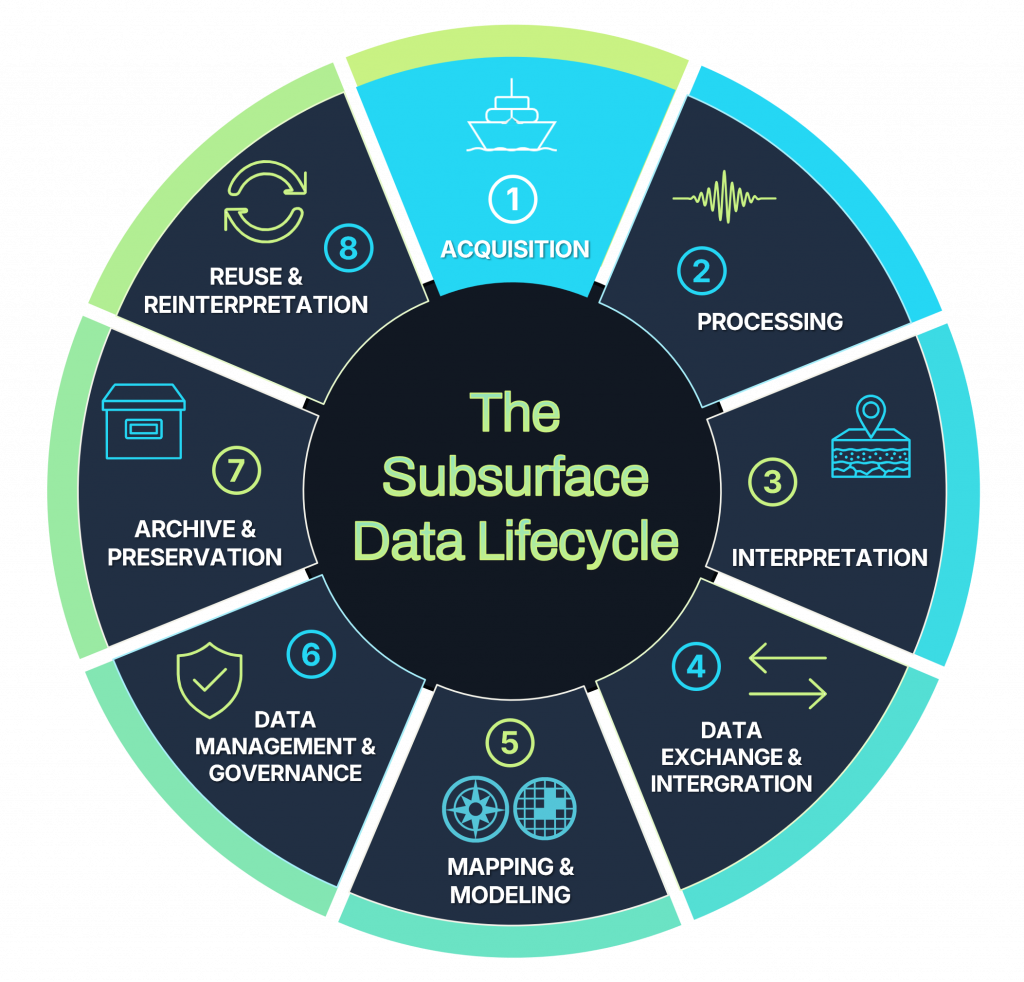
At a high level, subsurface data moves through several connected stages:
In reality, this lifecycle is rarely linear.
Seismic data acquired decades ago may be reprocessed using modern techniques. Interpretation projects often move between multiple software environments throughout the life of a field. Archived datasets may later support regional studies, CCS projects, offshore wind developments or entirely new exploration campaigns.
Subsurface data is continually evolving. Its value grows not only through interpretation, but through its ability to be rediscovered, understood and reused.
Interpretation platforms are some of the most advanced and visible technologies used in the subsurface industry. They are where many of the most important technical decisions are made.
However, interpretation is only one stage in a much broader lifecycle.
In many organisations today, subsurface data is:
These challenges are rarely caused by a single application. Instead, they arise from the complexity of managing data across multiple workflows, departments and technical environments over long periods of time.
As subsurface ecosystems become increasingly connected, managing the movement of data between systems becomes just as important as managing the data itself.
 The subsurface industry is undergoing significant transformation.
Organisations are migrating data to the cloud, implementing modern data platforms, adopting OSDU frameworks, integrating multiple interpretation environments, modernising archives and preparing data for analytics and AI.
These initiatives have one thing in common.
Success depends not only on where subsurface data is stored, but on whether its technical context, relationships and provenance remain intact as it moves across the wider lifecycle.
Simply centralising subsurface data does not automatically make it usable.
Governance is not a single stage in the lifecycle, but an ongoing capability that helps ensure data remains trusted, connected and usable from acquisition through to reuse.
Unlike many enterprise datasets, technical subsurface information depends on relationships between seismic, wells, horizons, interpretations, documents, spatial data and project context. Simply storing these datasets together does not preserve those relationships.
To remain valuable, subsurface data must be discoverable, trusted, governed and accessible across the people, applications and workflows that rely on it.
For many years, organisations naturally focused on individual software environments.
Each plays an important role, but none exists in isolation.
Today’s subsurface workflows span multiple applications, cloud environments, archives and technical disciplines. Understanding how these systems connect and how data flows between them, is becoming increasingly important for both technical efficiency and business outcomes.
Rather than asking, “Which system stores this data?”, organisations are increasingly asking, “How do we ensure this data remains valuable throughout its lifecycle?”
That is a fundamentally different way of thinking.
The subsurface industry has always generated enormous volumes of valuable technical data.
Increasingly, the challenge is not simply storing that data, but ensuring it remains connected, trusted and accessible as it moves between systems, teams and technologies.
We believe the industry’s greatest opportunities lie not within individual applications, but in how those applications work together throughout the subsurface data lifecycle.
The value of subsurface data extends far beyond the files themselves. It lies in the relationships, context and history that allow that data to be understood, trusted and reused over time.
Because subsurface data creates the most value when it can move, be trusted, and remain accessible throughout its lifecycle.
Understanding the lifecycle is only the beginning. Managing it effectively requires connected workflows, trusted data, and technologies that support the movement, governance, and long-term value of subsurface information.
Explore how Petrosys Group helps organisations maximise the value of subsurface data across its lifecycle.
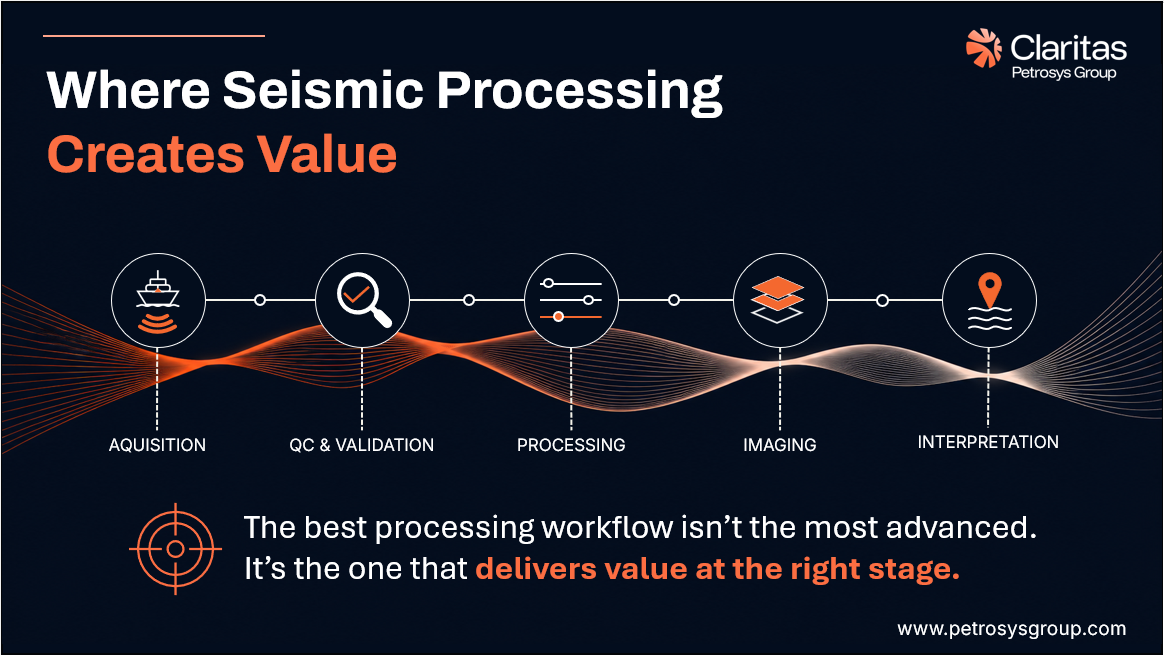
Seismic processing is often measured by the sophistication of its algorithms. But project value is created across the entire workflow. This article explores why successful processing is about applying the...
Preparing a UK NDR submission involves more than transferring files. From seismic format compliance to metadata validation, we outline the key challenges companies face and the structured workflow required to...